


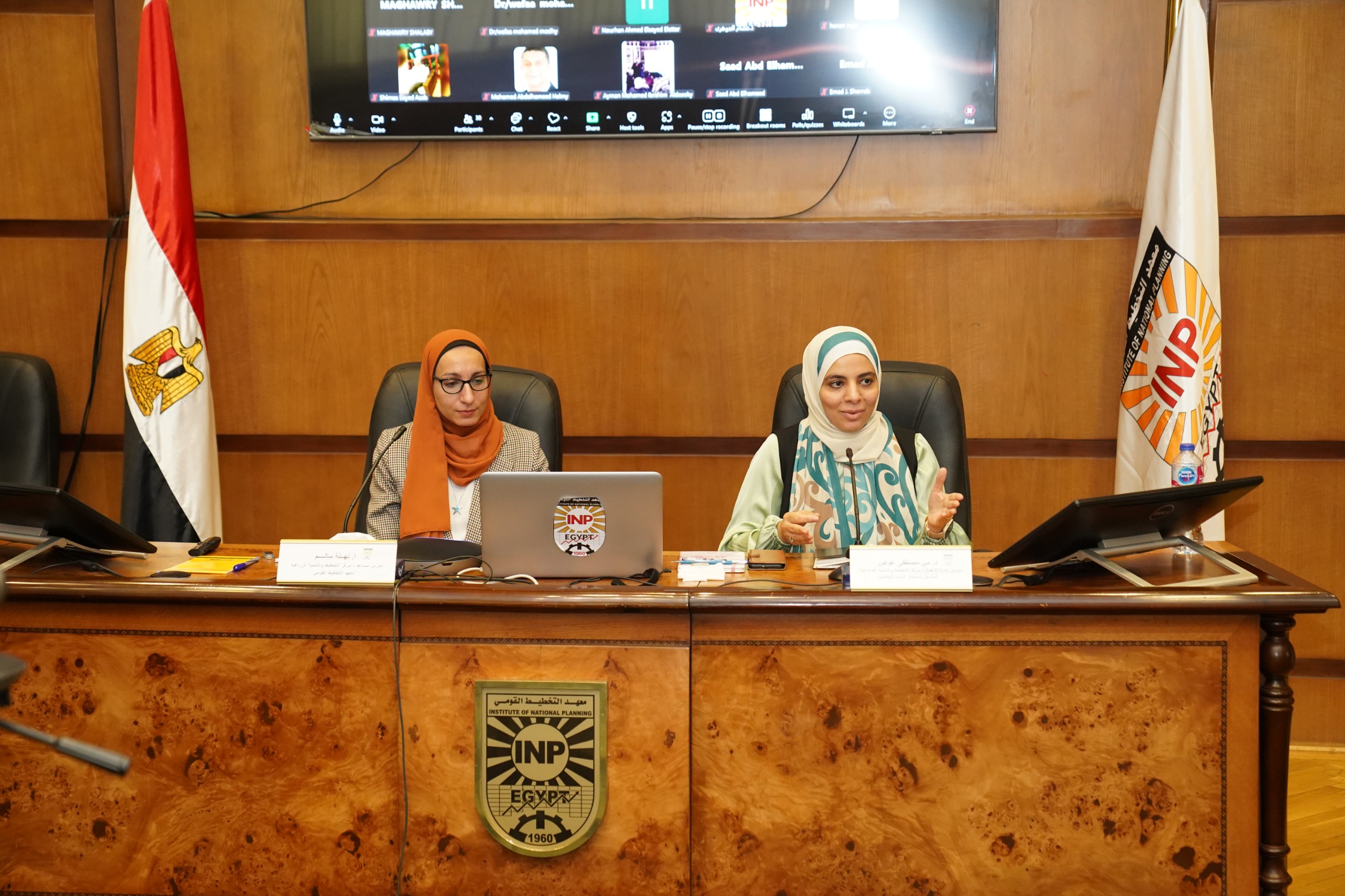
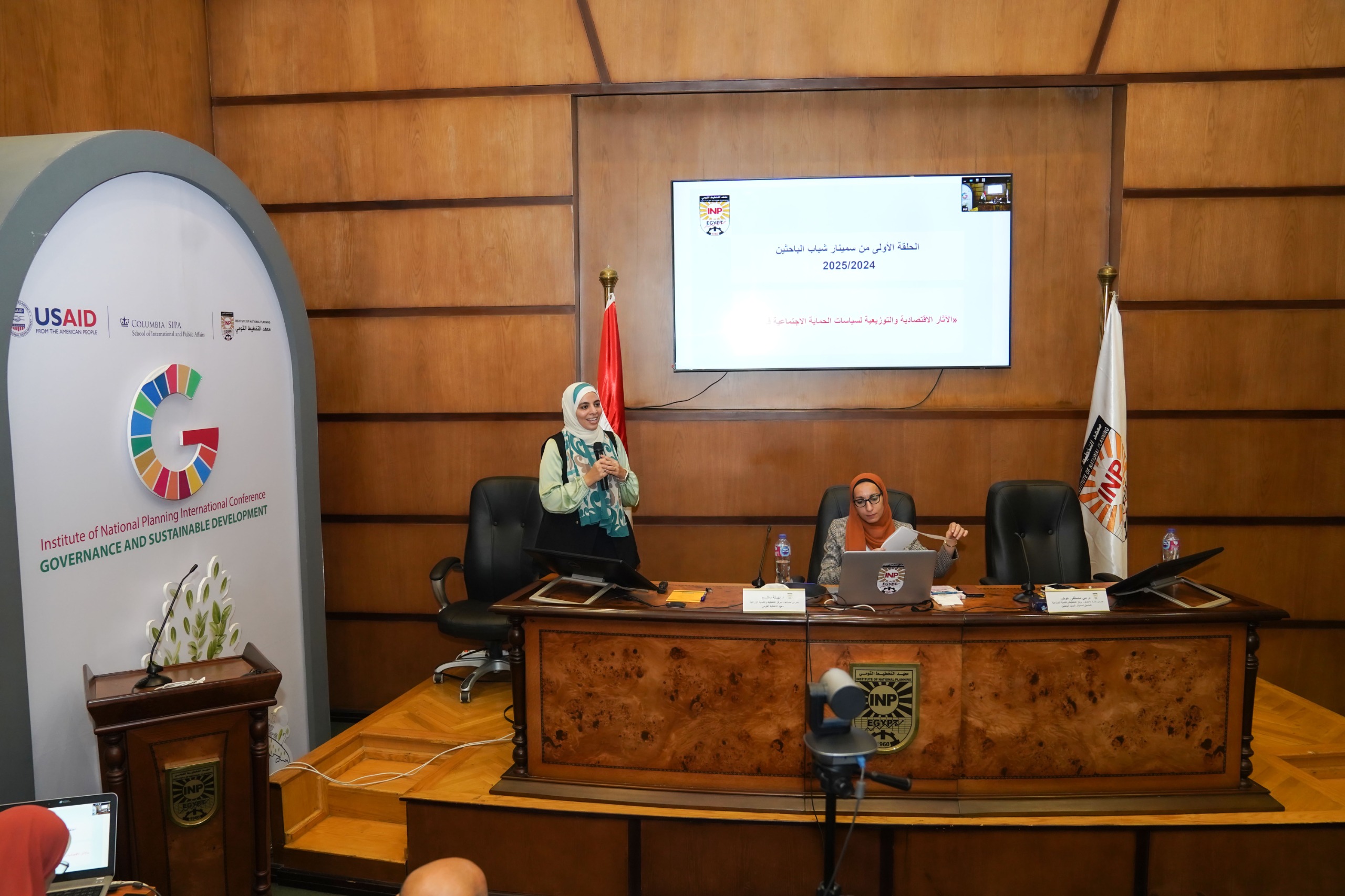
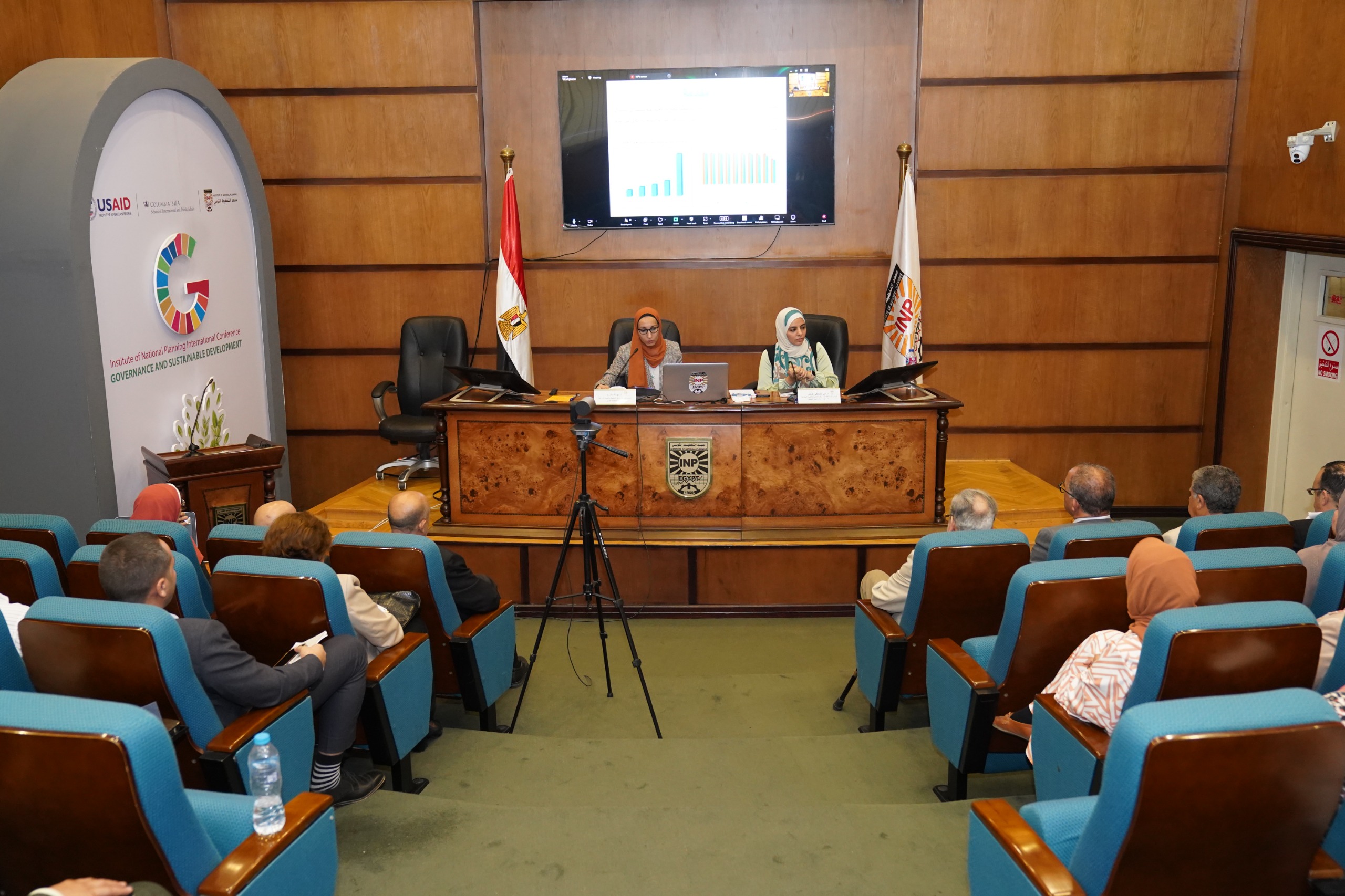
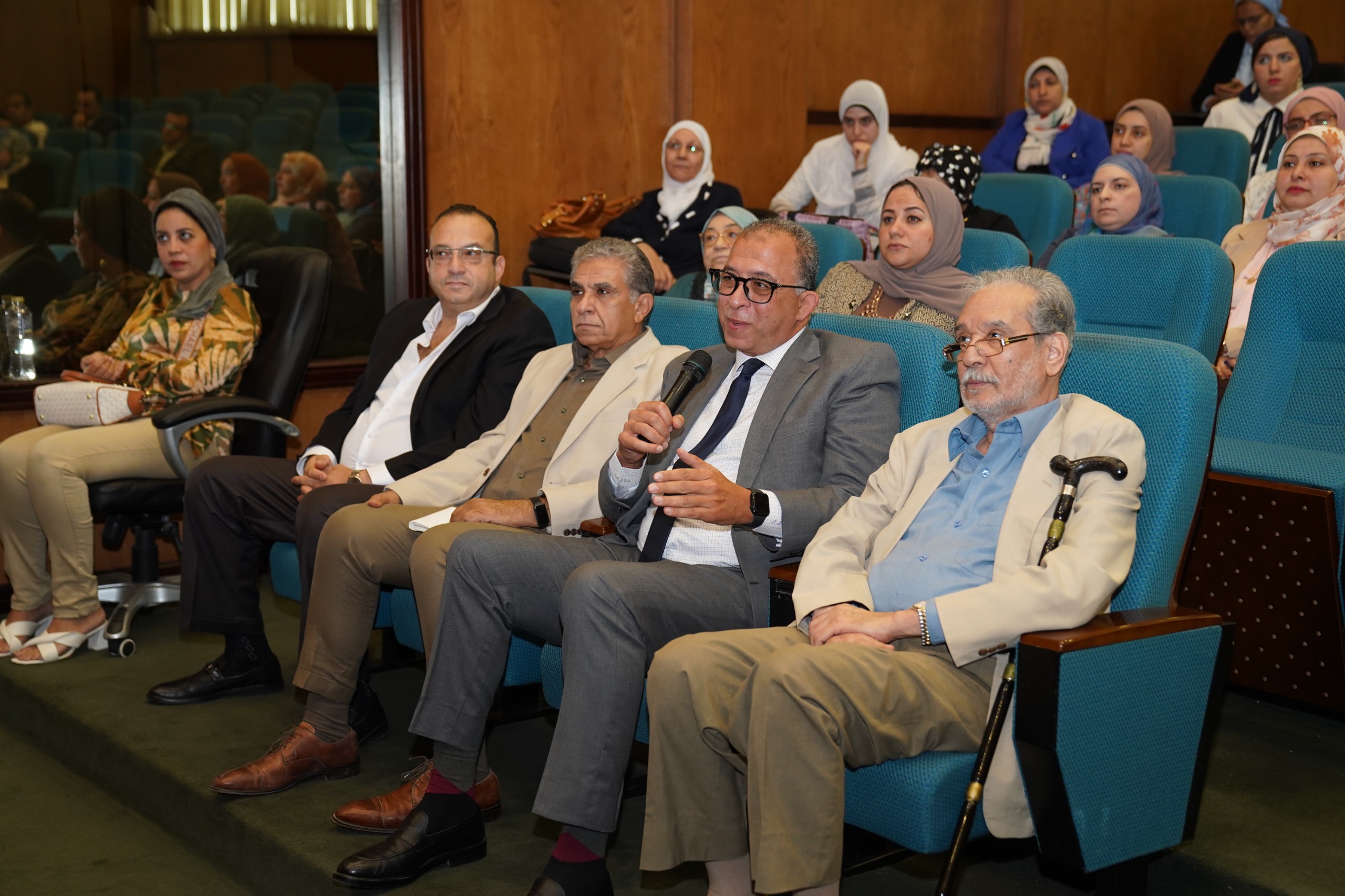
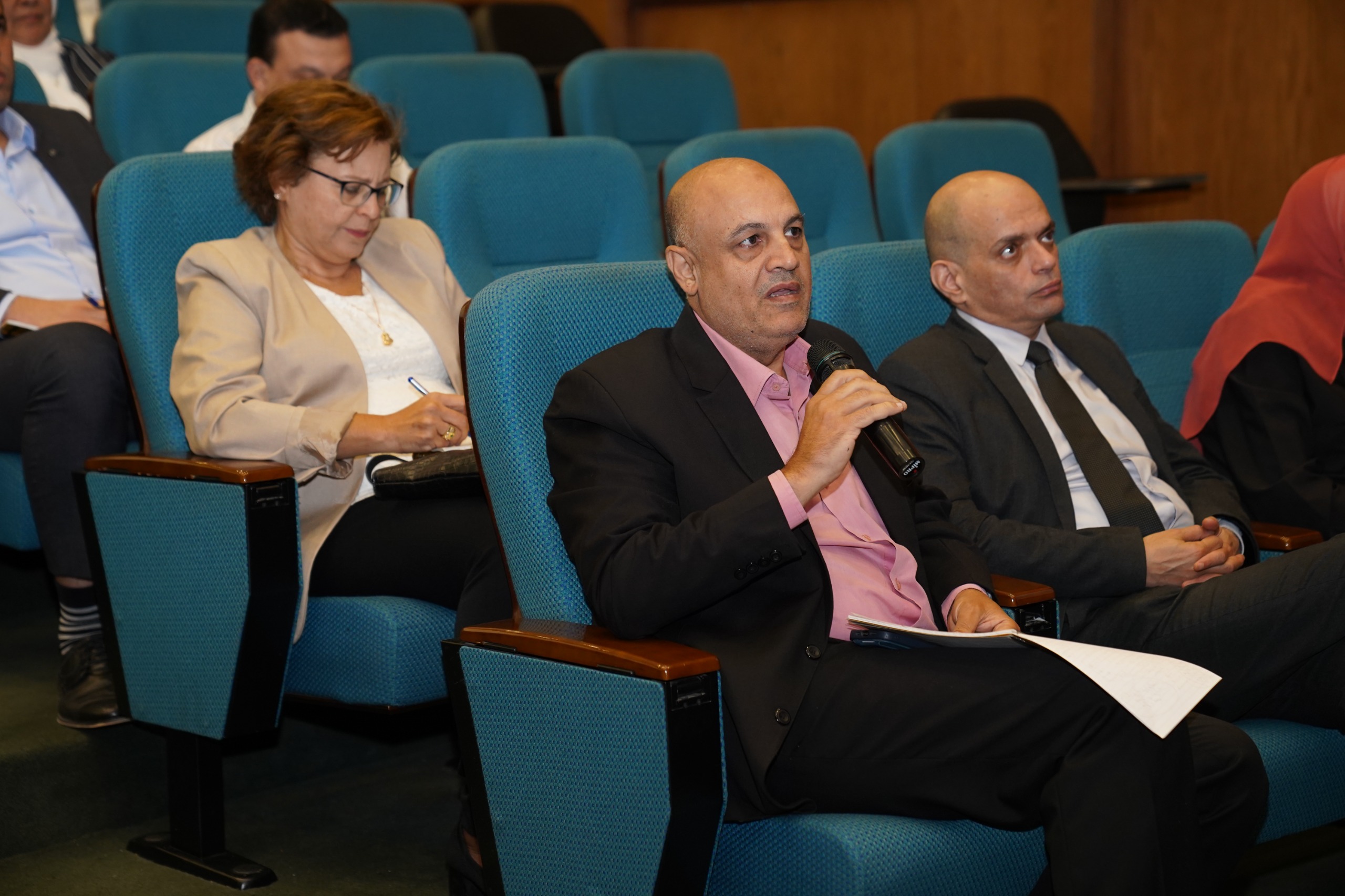
The Institute of National Planning (INP) held the first session of its “Young Researchers’ Seminar” for the 2024/2025 academic year, titled “Economic and Distributional Effects of Social Protection Policies in Egypt.” The seminar was presented by Ms. Nahla Salem, Assistant Lecturer at the Center for Agricultural Planning and Development, and moderated by Dr. Mai Awad, Lecturer in Strategic Management at INP and the seminar’s principal coordinator. Attendees included Prof. Ashraf Al-Araby, President of INP; Prof. Ashraf Saleh, Vice President for Training, Consultations, and Community Service; Prof. Khaled Attia, Vice President for Research and Graduate Studies; and a distinguished group of professors, academics, and specialized researchers.
This session aligns with the Egyptian government’s recent adoption of an ambitious economic reform program, which necessitates implementing social protection initiatives to mitigate potential adverse effects on vulnerable and low-income groups. A key component of this program is the shift from inefficient, generalized subsidies toward strengthening targeted social safety nets that prioritize efficiency and reach the most deserving segments of society.
The seminar aimed to monitor and analyze Egypt’s primary social protection programs, highlight recent developments, and evaluate the distributional and economic impacts of expanding cash transfers to the neediest groups. This assessment employed a general equilibrium approach, which accounts for inter-sectoral linkages and economy-wide policy effects—both direct and indirect—at the macroeconomic level.
The discussion also reviewed government social policies aimed at institutionalizing social protection, including social insurance programs (e.g., pensions for old age, workplace injuries, unemployment, survivors, and maternity) and social assistance (e.g., cash and in-kind subsidies), tracing their historical evolution to the current policy framework.
Regarding cash transfer programs, the seminar noted that the Egyptian government launched a social protection plan in 2015 as part of broader economic reforms initiated in 2014. This plan introduced new cash assistance programs, notably “Takaful and Karama”, which have recently gained increased government attention as mechanisms for targeted support to the most vulnerable.
On in-kind subsidies, the session emphasized their integral role in social protection programs, which have undergone significant reforms in recent years. Three policy scenarios were examined:
1- Full reform of food subsidies,
2- Expansion of targeted cash transfers,
3- Replacing food subsidies with better-targeted cash transfers.
These were analyzed using a dynamic general equilibrium model for Egypt, assessing their implications for efficiency, equity, and fiscal sustainability.
Key Conclusions:
- Comprehensive food subsidy reforms and expanded cash transfers for poor households may create tensions between social equity, economic efficiency, and long-term fiscal sustainability.
- Replacing food subsidies with cash transfers for the neediest families does not necessarily align these objectives and requires careful balancing.
The seminar fostered rigorous academic dialogue, underscoring INP’s role in shaping evidence-based policy discussions on Egypt’s social protection landscape